
GIVE EVERYDAY by Gratitude Design · No.01 · October 2026 · Web edition · Free to read, free to share

From Give, to Every Homeowner
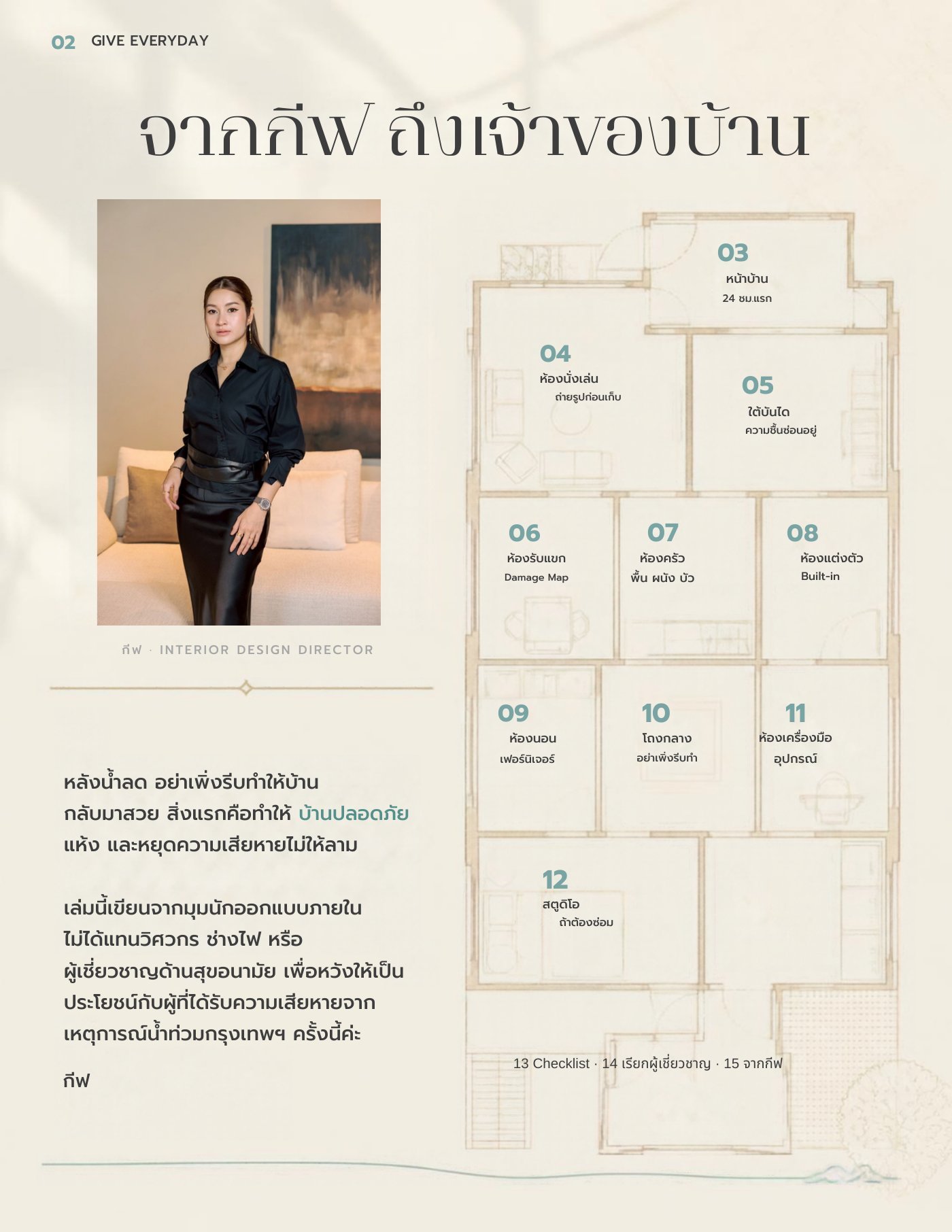
Once the water recedes, do not rush to make the home beautiful again. The first task is to make the home safe and dry, and to stop the damage from spreading
This guide is written from an interior designer’s point of view. It does not replace an engineer, an electrician or a hygiene specialist. I hope it is useful to everyone whose home was damaged in the Bangkok floods.
Give
In this issue
- The first 24 hours: what to do first
- Before you clean up: what to photograph
- The water is gone, but the moisture may remain
- 10 cm of water indoors: what gets hit
- Floors, walls and skirting: what to look for
- Flooded built-ins: repair or replace
- Which furniture can be saved
- 5 things not to rush after a flood
- Tools that help you check and restore
- If you must repair, do not rebuild it the same way
- Post-flood home checklist
- When to call a specialist
1. The first 24 hours: what to do first
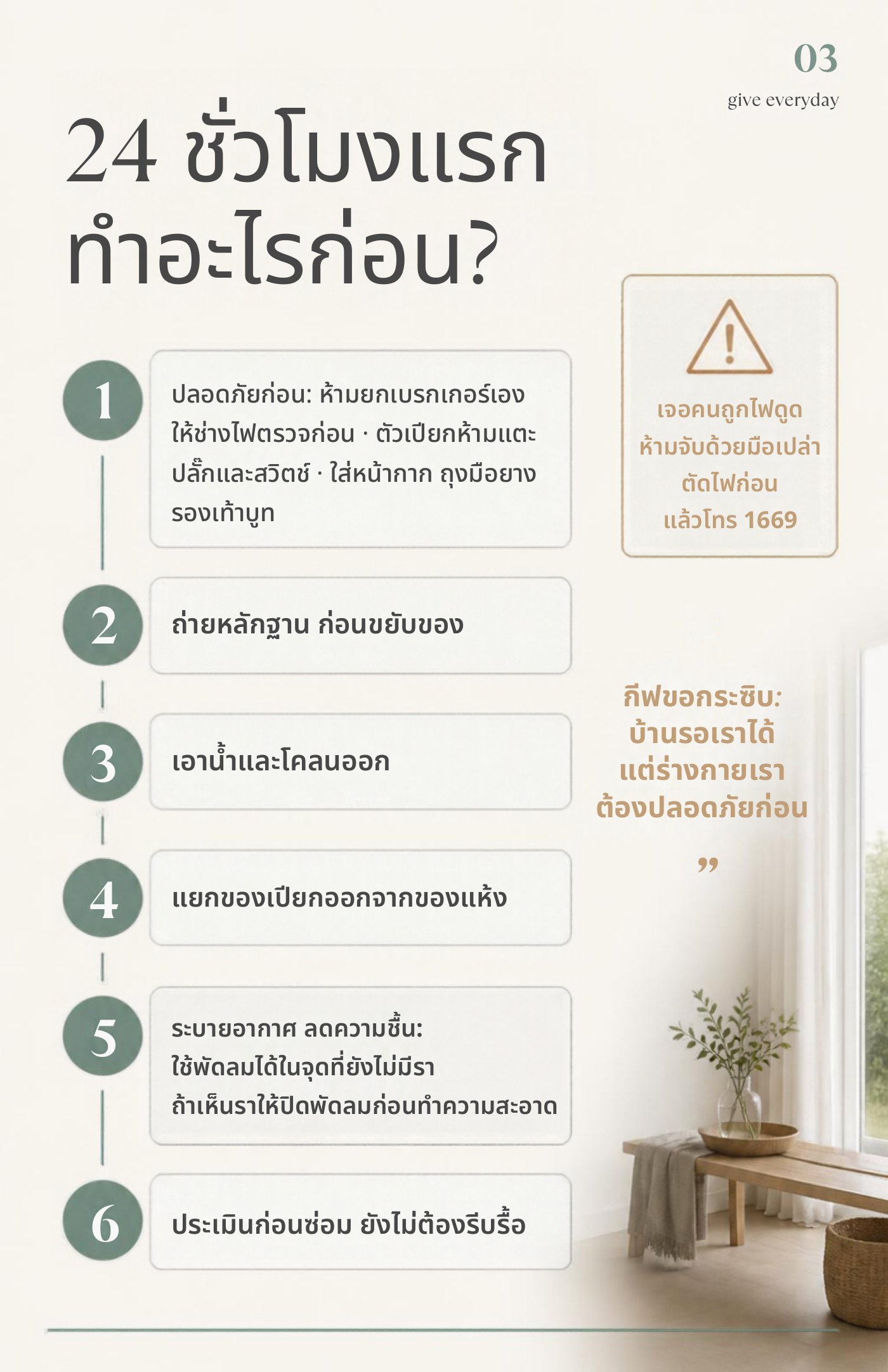
- Safety first: do not switch the breaker back on yourself; have an electrician inspect first. Never touch sockets or switches while wet. Wear a mask, rubber gloves and boots.
- Photograph the evidence before moving anything
- Remove water and mud
- Separate wet items from dry ones
- Ventilate and reduce humidity: fans are fine where there is no mould yet. If you see mould, switch the fan off before cleaning.
- Assess before you repair (no need to tear anything out yet)
Caution: if someone is being electrocuted, never touch them with bare hands. Cut the power first, then call 1669
A whisper from Give: the house can wait, but you must be safe first.
2. Before you clean up: what to photograph
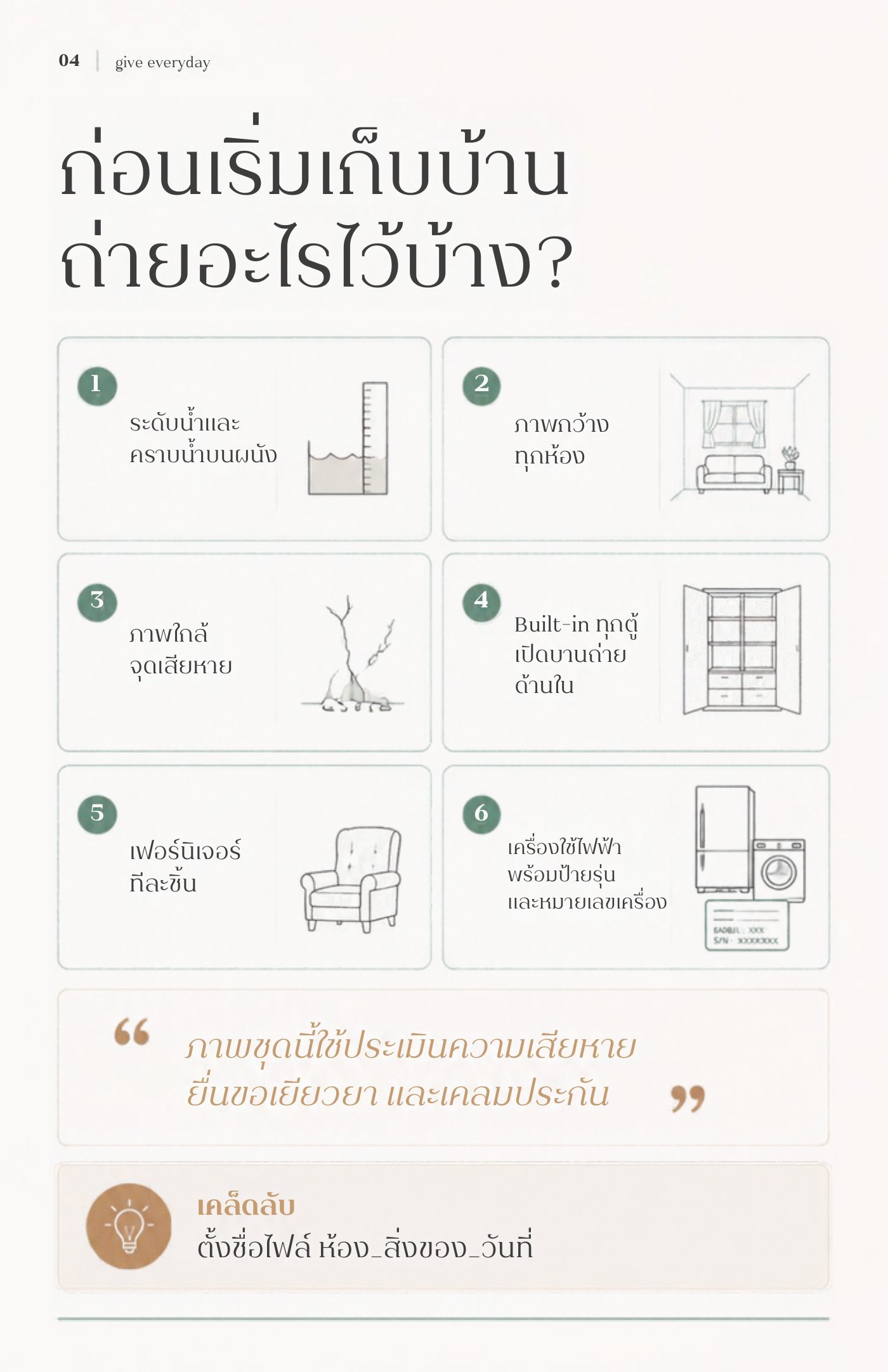
- Water level and tide marks on the walls
- A wide shot of every room
- Close-ups of each damaged spot
- Every built-in cabinet, doors open, with the interior photographed
- Furniture, piece by piece
- Appliances, with model plates and serial numbers
This set of photos supports damage assessment, relief applications and insurance claims.
Tip: name each file Room_Item_Date
3. The water is gone, but the moisture may remain

5 places where moisture hides
- Behind built-ins
- Under the floor
- Behind skirting
- Inside walls
- Under furniture
A musty smell is the first sign that moisture has not gone anywhere.
What you cannot see is what damages the home a second time.
4. 10 cm of water indoors: what gets hit

- Door frames
- Lower walls
- Built-in cabinet bases
- Floors
- Furniture legs
- Skirting boards
Some materials wick moisture higher than the water line.
5. Floors, walls and skirting: what to look for
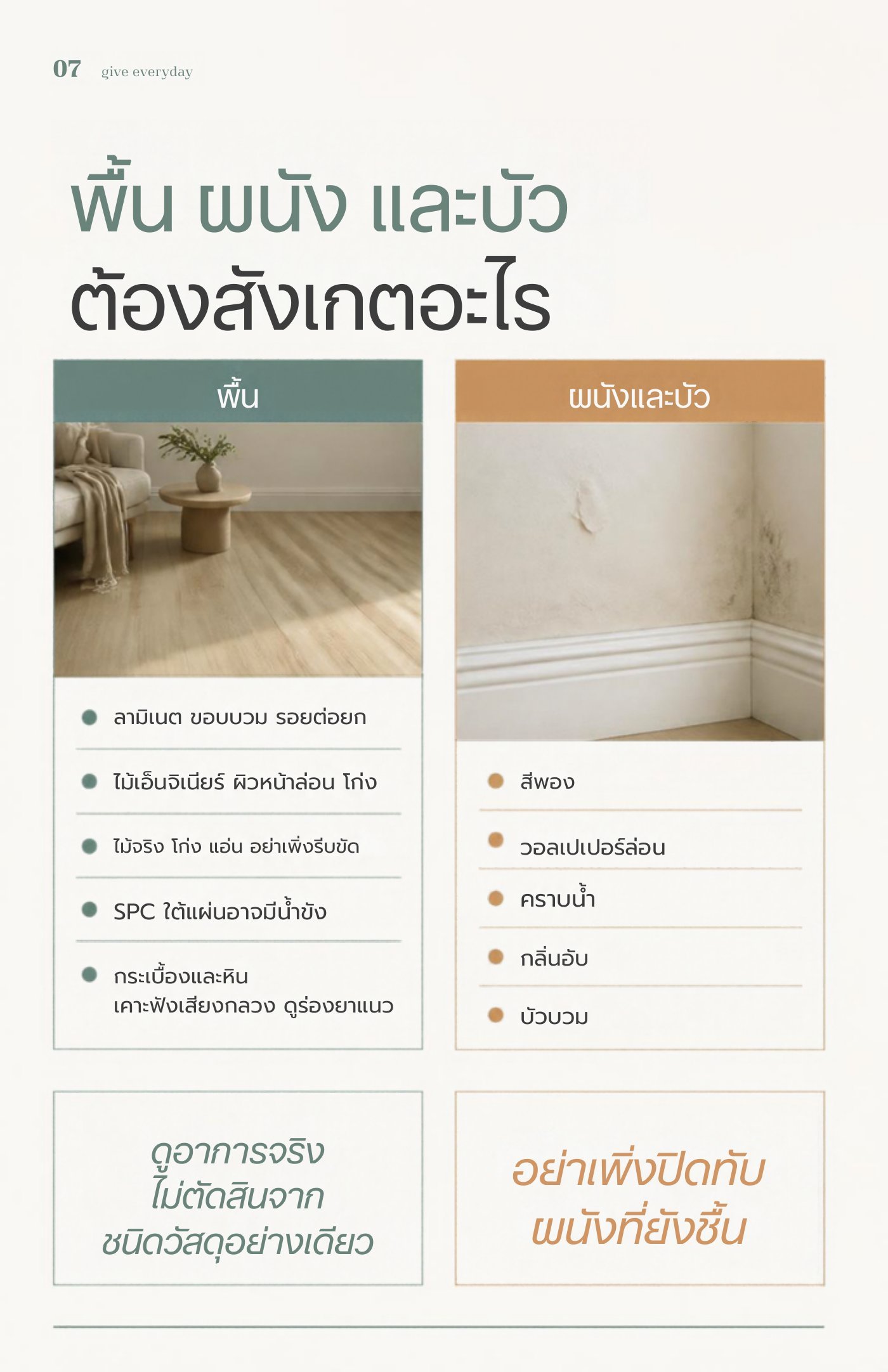
Floors
- Laminate swollen edges, lifted joints
- Engineered wood delaminating surface, warping
- Solid wood cupping and bowing; do not rush to sand
- SPC water may be trapped beneath the planks
- Tile and stone tap and listen for hollow sounds, check the grout lines
Judge by the actual symptoms, not by material type alone.
Walls and skirting
- Blistering paint
- Peeling wallpaper
- Water stains
- Musty smell
- Swollen skirting
Do not cover up a wall that is still damp.
6. Flooded built-ins: repair or replace

Materials commonly found in built-ins: MDF, particle board, plywood, solid wood and veneer.
Signs to look for
- Swelling
- Warping
- Delamination
- Peeling surface
- Musty smell
- Mould
Decision box
- Swollen or delaminated: that piece usually needs replacing
- Surface stains only: clean, let it dry, then assess again
A story
One client rushed to re-surface their cabinets right after the flood. They looked beautiful for less than a month before mould grew from the inside. Everything had to be torn out and rebuilt, and paid for twice. Since then, I always measure moisture first.
7. Which furniture can be saved

Go through each material in turn (wood, stone, metal, upholstery and rugs) following these 4 steps.
- Assess
- Clean and dry
- Repair
- Replace
Keep or discard
- Keep: clean, air-dry, then assess again
- Replace if it cannot be washed and dried completely
8. 5 things not to rush after a flood
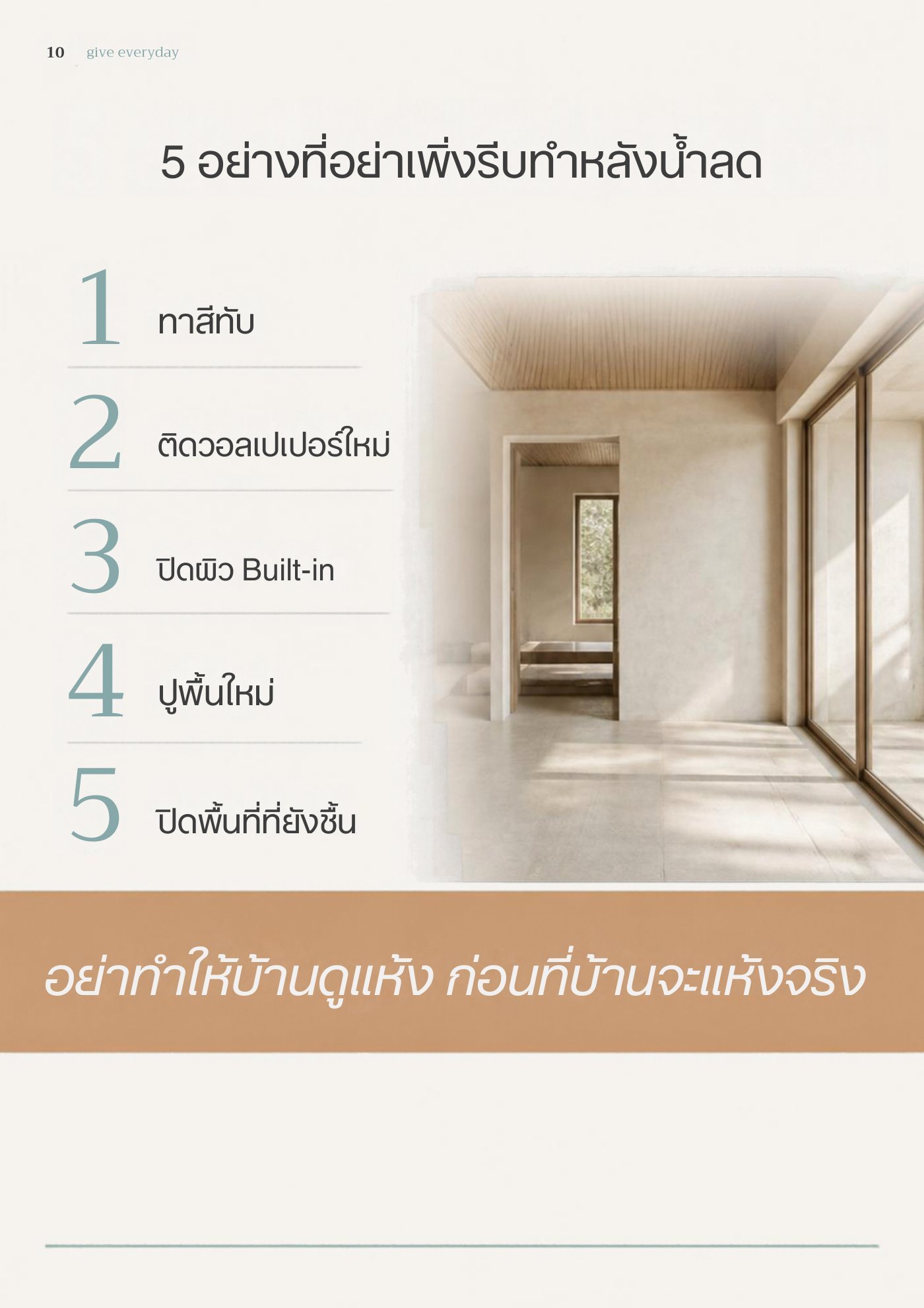
- Painting over
- Hanging new wallpaper
- Re-surfacing built-ins
- Laying new flooring
- Sealing up areas that are still damp
Do not make the home look dry before it truly is.
9. Tools that help you check and restore

- Moisture Meter measures moisture inside materials
- Hygrometer measures humidity in the air
- Dehumidifier removes moisture from the air
- Air mover for areas with no mould yet
- Wet & Dry Vacuum picks up water and dust
You do not need them all. Start with what your home needs most.
10. If you must repair, do not rebuild it the same way

5 ideas
- Raise built-in bases off the floor
- Choose water-resistant materials near floor level
- Use freestanding furniture that can be lifted out of the water’s way
- Raise socket positions and replan the wiring with an electrician
- Design so that parts can be replaced individually
A whisper from Give: good design is not only beautiful. It is ready for a home’s worst day.
11. Post-flood home checklist
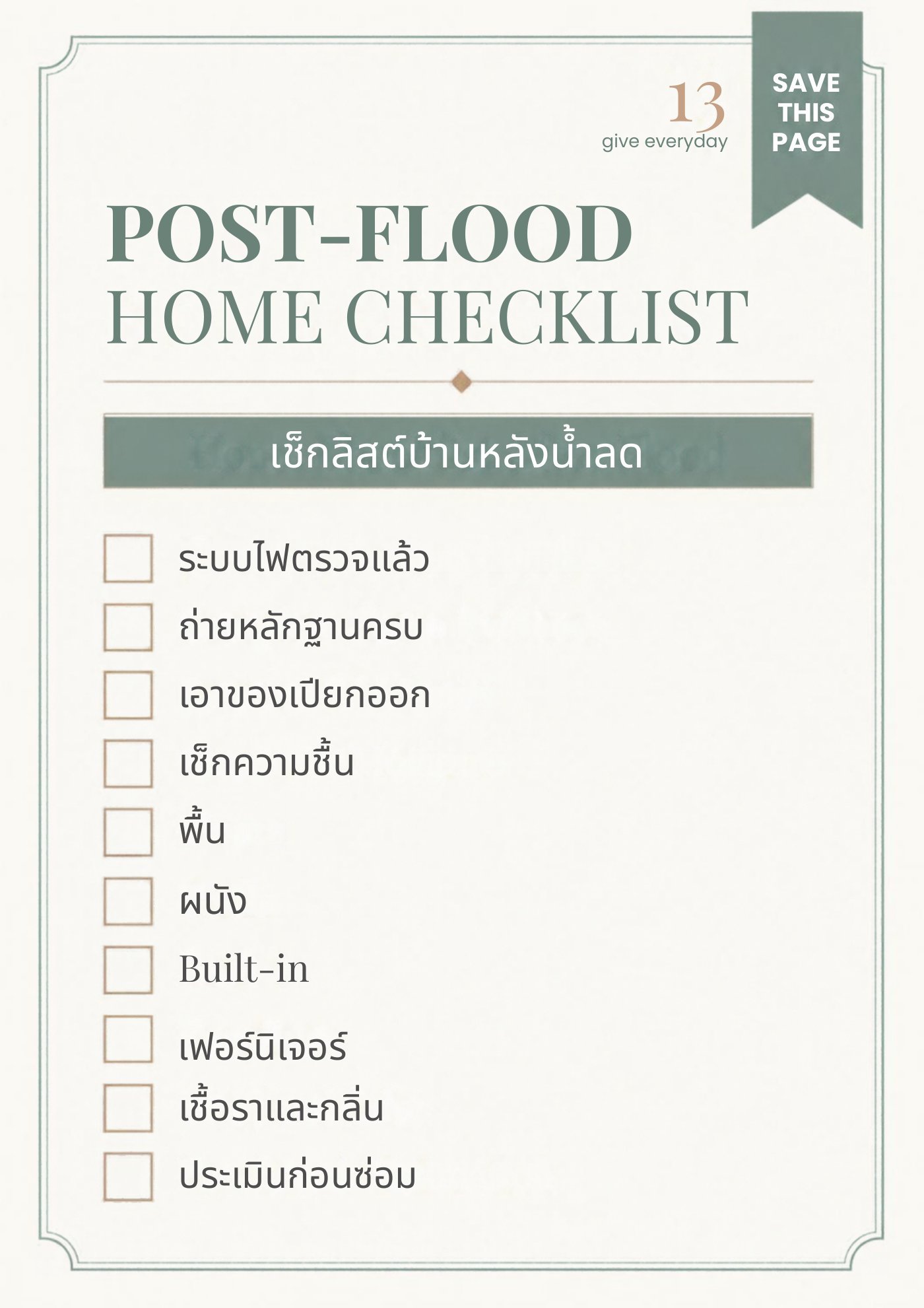
Save this page and work through it one item at a time.
- Electrical system inspected
- Evidence fully photographed
- Wet items removed
- Moisture checked
- Floors
- Walls
- Built-in
- Furniture
- Mould and odour
- Assess before you repair
12. When to call a specialist
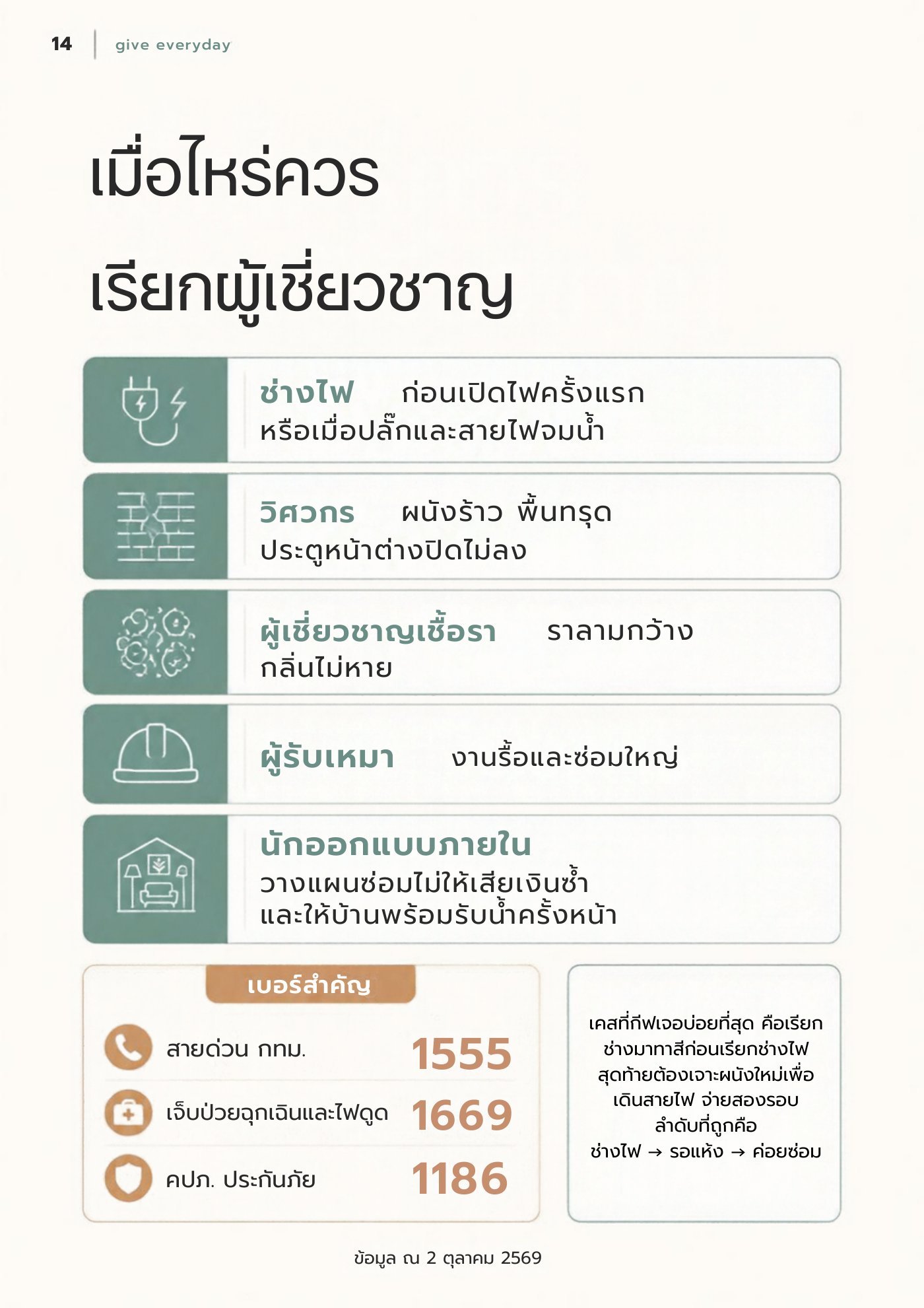
- Electrician before switching the power on for the first time, or when sockets and wiring have been submerged
- Engineer cracked walls, sunken floors, doors or windows that no longer close
- Mould specialist widespread mould, a smell that will not go away
- Contractor demolition and major repairs
- Interior designer to plan repairs so you do not pay twice, and to ready the home for the next flood
The case I see most often: the painter is called before the electrician. The walls then have to be cut open again to run new wiring, and the work is paid for twice.
The right order: electrician → wait until dry → then repair
Key numbers (Thailand)
- Bangkok Metropolitan Administration hotline 1555
- Medical emergencies and electric shock 1669
- Office of Insurance Commission (OIC), insurance 1186
Information as of 2 October 2026
From Give

A home may not return to what it was in a single day. But if we know where to begin, we will bring it back, little by little.
Give Warakorn · Interior Design Director · Gratitude Design
This issue was made to be useful to everyone. If it can help someone, please pass it on.
More stories about the home on TikTok @give.everyday · Interior design enquiries on IG gratitudedesign
Next issue, No.02: A Beautiful Home That Does Not Fear Water