When the World of Interior Design Led Me to Curate My First Art Exhibition
Some Things We Learn Find Their Way Back to Us
Some of the things we learn may one day come back to us.
There are many things we choose to learn “just out of curiosity”, without knowing, at the time, when we might ever use them.
For me, one of those things was curating.
Beyond interior design, I have always been drawn to museums and art. Whenever I travel, a museum or an exhibition is always on the list. Until one day I felt that I wanted to understand more than a visitor walking through.
I wanted to know what the artist was thinking.
Why they chose to tell a story through those colours, lines, or objects.
And why the same work, placed in one space, feels so different from when it sits in another.
So I decided to study curating.
I admit there was plenty I found confusing while studying. It is a world quite different from the interior design I know so well, and at the time I never imagined that one day I would actually put what I learned to use.
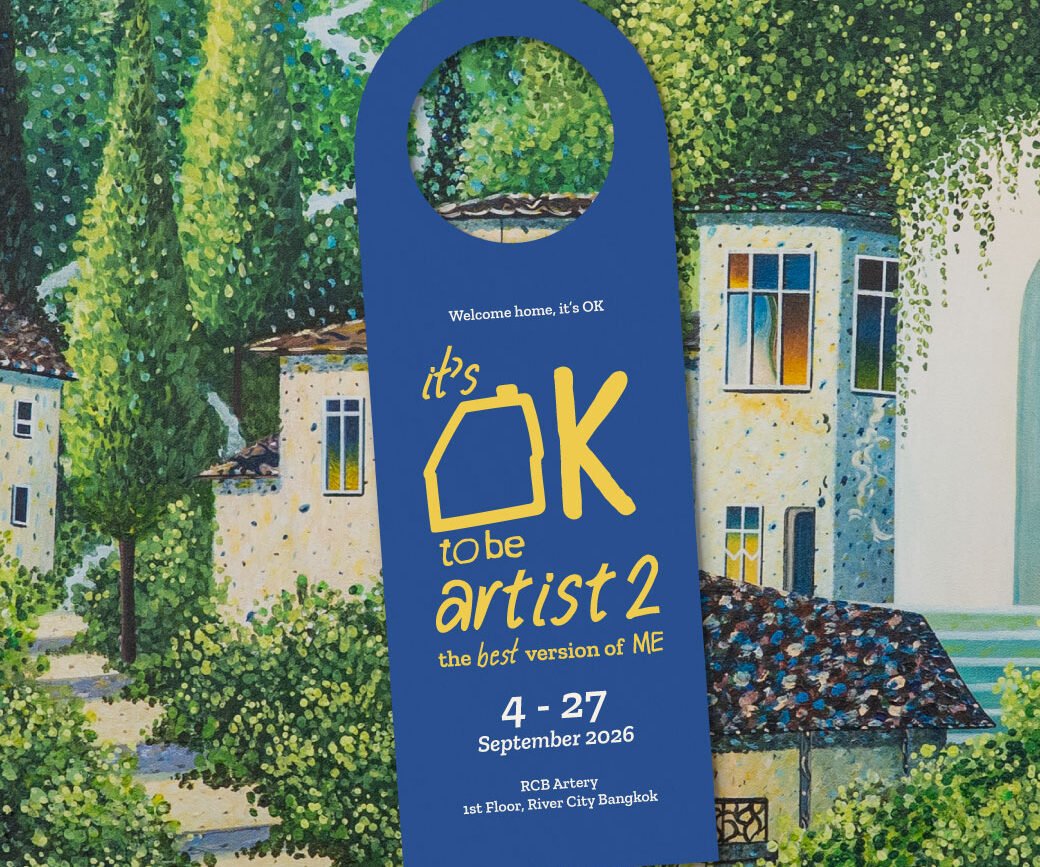
Then came the exhibition “It’s OK to Be Artist 2: The Best Version of Me” — which I had the opportunity to co-curate, and to design the visitor experience for, together with Art Story by Autistic Thai under the Autistic Thai Foundation.
It was the first time I felt so clearly that the world of interior design and the world of art are not far apart at all.
Because both are speaking about the same thing, in different languages.
Namely: people, feeling, and the spaces in which we express who we are.
From “The Best Version of Me” to the Word Home
The brief began with the words The Best Version of Me
Rather than immediately imagining what the exhibition should look like, I began with a simple question:
What kind of space allows a person to be fully themselves?
The answer that slowly came into focus for me was the word Home
Not a home in the sense of a place to live,
but a space where we feel safe.
A space where we don’t have to try to be like anyone else.
A space where we can stop, rest, be with ourselves, or express ourselves in our own way.
From here, the concept of the exhibition took shape:
A Home for Every Version of Me
A home not made for “one kind of person”, but a home that accepts that everyone sees the world, feels, and is themselves in a different way.
There Is No Single Way to See the World
One thing I was very careful about in this project was not to assume that “autistic people are like this” or “need this kind of space”.
Because what fascinated me most was in fact the opposite: no two of them are alike.
Each of the 39 autistic artists in this exhibition has a colour they love,
details they are drawn to,
their own way of repeating a mark,
objects or stories that live in their world,
and a different way of expressing it all.
One sentence stayed with me throughout the project:
There is no single way to see, feel, or belong.
There is no single way to see the world,
no single way to feel,
and no single way to belong.
This sentence became the heart of the entire spatial design.
When Artwork Doesn’t Stop at the Wall
As an interior designer, what I enjoyed most was trying to see the artwork as more than “a picture to hang”.
What if a line in a painting could become a line in the space?
What if a colour became the atmosphere of a room?
What if a pattern became a floor, a material, or an object we could touch?
These questions made Gratitude Design’s role in this project very clear to me: we were not there to decorate a space for the art.
Rather, we were acting as a Spatial Translator — one who translates the language of art into the language of space.
And from this thought came the sentence I used as a compass throughout the work:
Every Line Becomes a Place.
Every line can have a space of its own.
A Journey Through One House
I didn’t want the work to be read as “several zones”, but as a walk through a single house, where each room slowly unfolds the meaning of The Best Version of Me — layer by layer.
The Key
The journey begins with a key
A key that is not only for opening doors, but a symbol of opening one’s way of seeing.
This key opens more than a door.
It opens another way of seeing.
The Room of Reflection
A private space that invites you back to yourself.
Sometimes, the quietest spaces
are where we hear ourselves most clearly.
Sometimes, in the quietest of spaces,
we hear our own voice most clearly.
The Room of Belonging
The living room is where we begin to live alongside others.
For me, belonging does not mean trying to fit in with everyone; it means being in a space where we feel at ease enough to remain ourselves.
Belonging begins where we feel safe enough to stay.
The Room of Identity
The walk-in closet tells the story of identity, because what we choose to keep, what we wear, the colours we love, and the things we keep close all say something about who we are.
What we choose to keep close
often says something about who we are.
The House of Many Worlds
And finally, the whole journey ends in a space where many worlds come together.
One home. Many worlds.
Every world has a place here.
What I love about this sentence is that it doesn’t ask everyone to think alike, or to understand one another completely.
Only that each world has a space of its own, and can still live alongside the others.
For me, that alone means a great deal.
Curating Made Me See Interior Design Again
The most interesting thing after this project is that I never felt I was “leaving” interior design to make art.
If anything, it made me understand my own interior work even more.
Because in the end, designing space is never only about beauty.
It is about people.
We are designing how people move,
where they pause,
what they see,
whether they feel safe,
and how much the space allows them to be themselves.
Curating brought me back to asking myself:
Perhaps good design is not the attempt to create “the best space”,
but to create the space that truly fits the people within it.
The Best Version of Me
Before this project, I might have read The Best Version of Me as a self that is more capable, better, or more complete.
But after living with this project, its meaning shifted a little.
For me, today, The Best Version of Me need not be the most perfect version.
It may be the version in which we no longer need to hide any part of ourselves.
A version that is given space,
that is seen,
and that gets to be fully itself.
And in the end, a journey that began by stepping into other people’s worlds may bring us back to look at our own world once more.
At the end of the journey, you meet yourself.
Perhaps the things we learned “just out of curiosity” were never really lost.
They were only waiting for the moment to reconnect with us, on the day we understand them well enough.
— Give Warakorn
Interior Designer / Curator / Founder of GiveEveryday & Gratitude Design
Exhibition Information
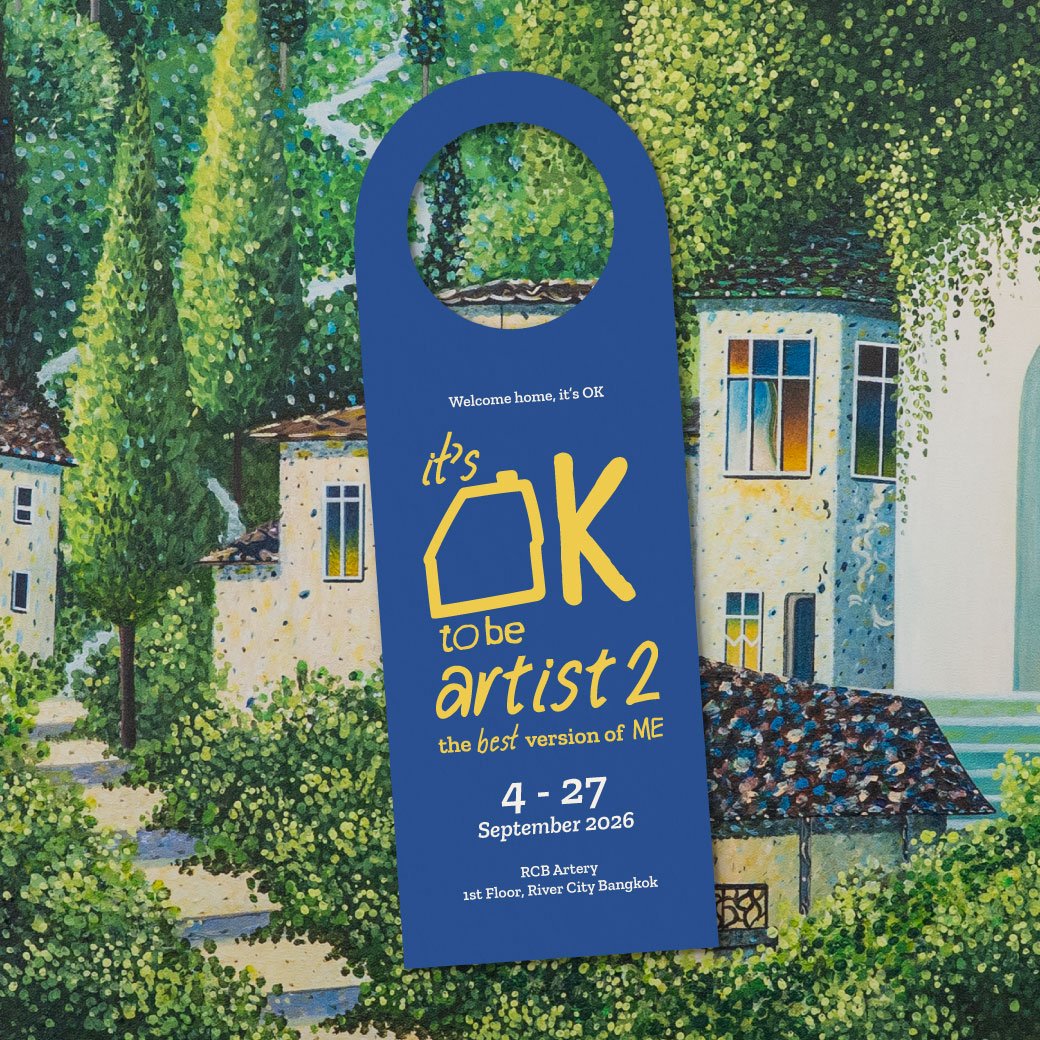
It’s OK to Be Artist 2: The Best Version of Me
Welcome home, it’s OK.
4 – 27 September 2026
RCB Artery, 1st Floor, River City Bangkok
An exhibition of works by 39 autistic artists
Presented by Art Story by Autistic Thai, under the Autistic Thai Foundation
Exhibition experience and curation in collaboration with Gratitude Design
Opening Day
Friday 4 September 2026 · 12.00 – 15.00
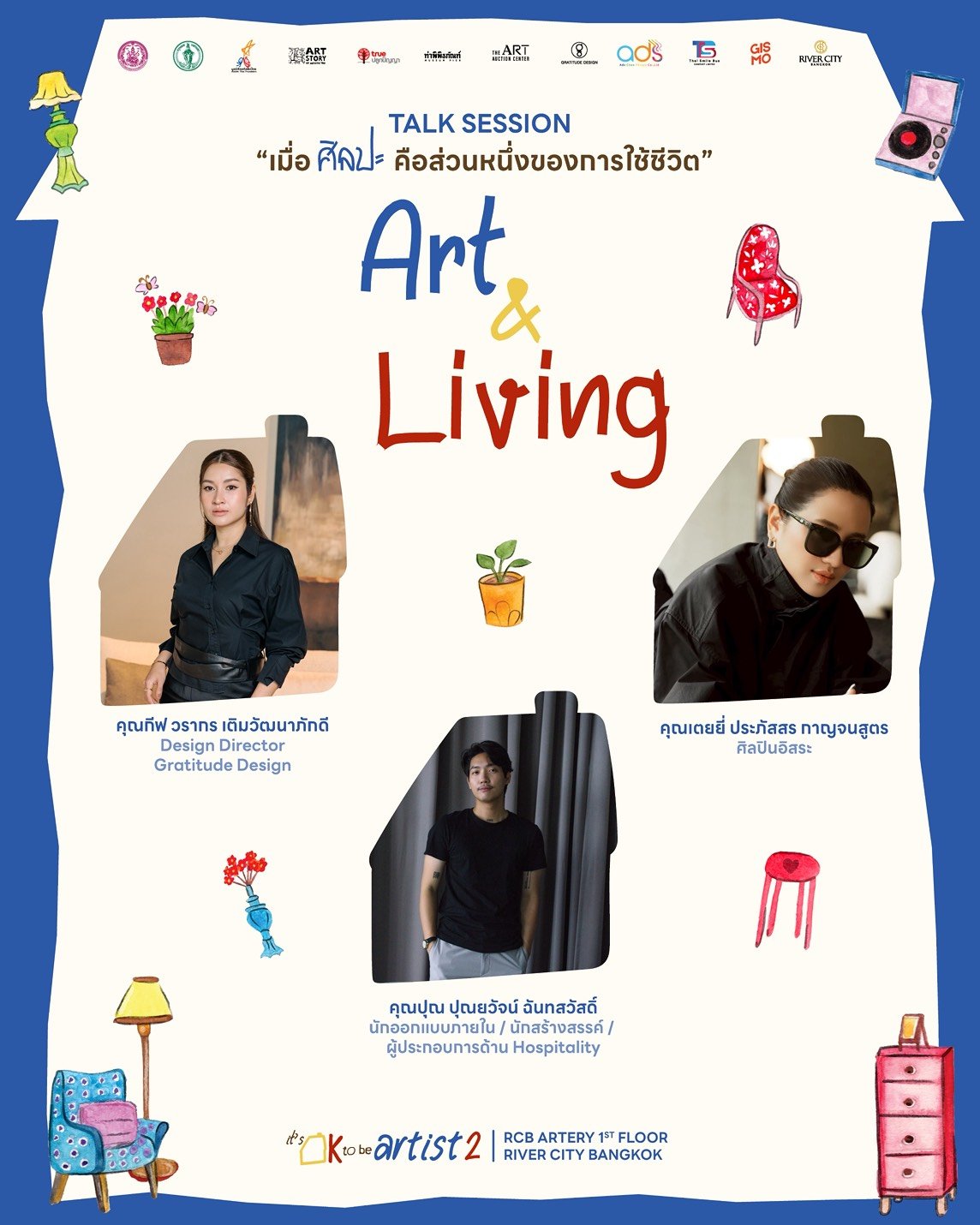
Talk Session · Art & Living
“When Art Is Part of Living”
Friday 4 September 2026 · 12.40 · RCB Artery, 1st Floor
Speakers
Give Warakorn Termwattanapakdee — Design Director, Gratitude Design
Toeyyee Prapatsorn Kanjanasoot — Independent Artist
Poon Punyawat Chantasawasdi — Interior Designer / Creative / Hospitality Entrepreneur
Exhibition Map · แผนที่นิทรรศการ
A Home for Every Version of Me
แตะหมายเลขบนแผนที่ หรือชื่อห้องด้านล่าง เพื่ออ่านเรื่องราวของแต่ละพื้นที่Tap a number on the plan, or a room below, to read its story.
← เลื่อนดูแผนที่ · scroll the plan →
- 1Overall Journey / StartYour Journey Home Begins Hereจุดเริ่มต้นของการเดินทาง
- 2The Key to BeginThis key opens more than a door. It opens a way of seeing.กุญแจดอกนี้ไม่ได้เปิดแค่ประตู แต่ชวนให้เราเปิดมุมมองอีกแบบหนึ่ง
- 3The Room of ReflectionBefore we meet the world, there are moments when we simply meet ourselves.ก่อนออกไปพบโลกภายนอก บางช่วงเวลา เราเพียงแค่ได้กลับมาอยู่กับตัวเอง
- 4The Room of IdentityIdentity lives in the details we choose.ตัวตนของเรา ค่อยๆ ปรากฏผ่านรายละเอียดที่เราเลือก
- 5The Room of BelongingBelonging begins where we feel safe enough to stay.ความรู้สึกว่าเราเป็นส่วนหนึ่ง เริ่มขึ้นในพื้นที่ที่เราสบายใจพอจะอยู่ในแบบที่เราเป็น
- 6The House of Many WorldsDifferent ways of seeing can still belong together.แม้เราจะมองโลกต่างกัน เราก็ยังมีพื้นที่ร่วมกันได้
- 7The Journey ContinuesAt the end of the journey, you meet yourself.เมื่อเดินทางมาถึงปลายทาง คนที่เราได้กลับมาพบอีกครั้ง อาจเป็นตัวเราเอง
It’s OK to Be Artist 2 : The Best Version of Me
4 – 27 September 2026 · RCB Artery, 1st Floor, River City Bangkok
An Exhibition by Art Story by Autistic Thai
Spatial & Exhibition Design by Gratitude Design
Curatorial Narrative by GiveEveryday